The advisers who asked for a higher sense of personal threat
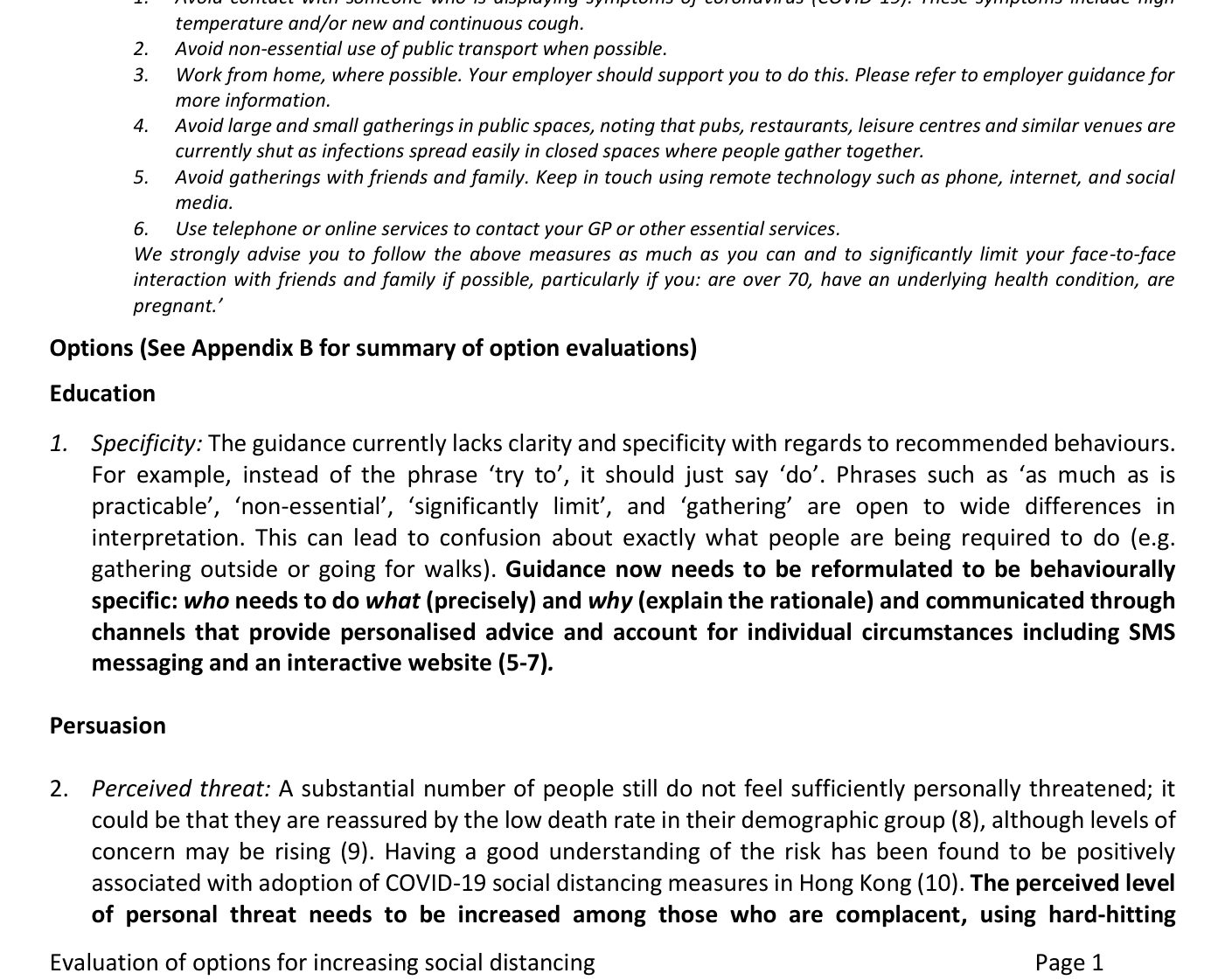
A paper dated 22 March 2020, prepared for the United Kingdom’s scientific advisory group, listed options for increasing adherence to social distancing. One option was to raise the perceived level of personal threat.
The record
- Event date
- Speaker or agency
- SPI-B, the behavioural science sub-group of SAGE (United Kingdom)
- Quotation
“The perceived level of personal threat needs to be increased among those who are complacent, using hard-hitting emotional messaging.”
- Archive copy
- web.archive.org
- Later revision
- None on file.
Audio
No Agenda 1245, “Mask Up!”, recorded May 24, 2020. The hosts read from the paper, including the sentence quoted in this piece.
Starts at 42:58. File at the host
The deck is the record. The essay is the publisher’s view.
What I make of it
On 22 March 2020 the British government’s advisers were asked for ways to increase adherence to social distancing. Their paper answered in writing. It said a substantial number of people “still do not feel sufficiently personally threatened.” It said the perceived level of personal threat “needs to be increased among those who are complacent, using hard-hitting emotional messaging.” The paper is advice, and it does not show what ministers did with it. It shows what the advisers were willing to ask for. They looked at people they thought were reassured by the low death rate in their own group and proposed to frighten them. Fear was the tool, and they put it in writing.